Back to Resources
Ultrasound for Dense Breasts: How Supplemental Screening Works, What It Finds, and How Often You Need It
Told you have dense breasts? How supplemental ultrasound screening works, what it can and can't find, how often to get one, and what it costs.

Medically reviewed by
Dr. Rachel F. Brem, MD, FACR, FSBI
Breast Radiologist
Written by
BeSound
Share on:

Key takeaways
Dense tissue can hide cancer on a mammogram. Mammograms miss up to 40% of cancers in women with dense breast tissue, and dense tissue also raises your risk.
Ultrasound turns the camouflage into contrast. On an ultrasound, dense tissue appears white and most cancers appear dark.
It adds to your mammogram, it doesn't replace it. Added to mammography, automated breast ultrasound detects 35.7% more breast cancers than mammography alone.
Looking more carefully means finding more things. Supplemental ultrasound can flag benign findings that lead to follow-up imaging, and 75 to 80% of breast biopsies come back benign.
For most women with dense breasts, it's an annual add-on. Your exact cadence depends on your density, your risk and a conversation with your provider.
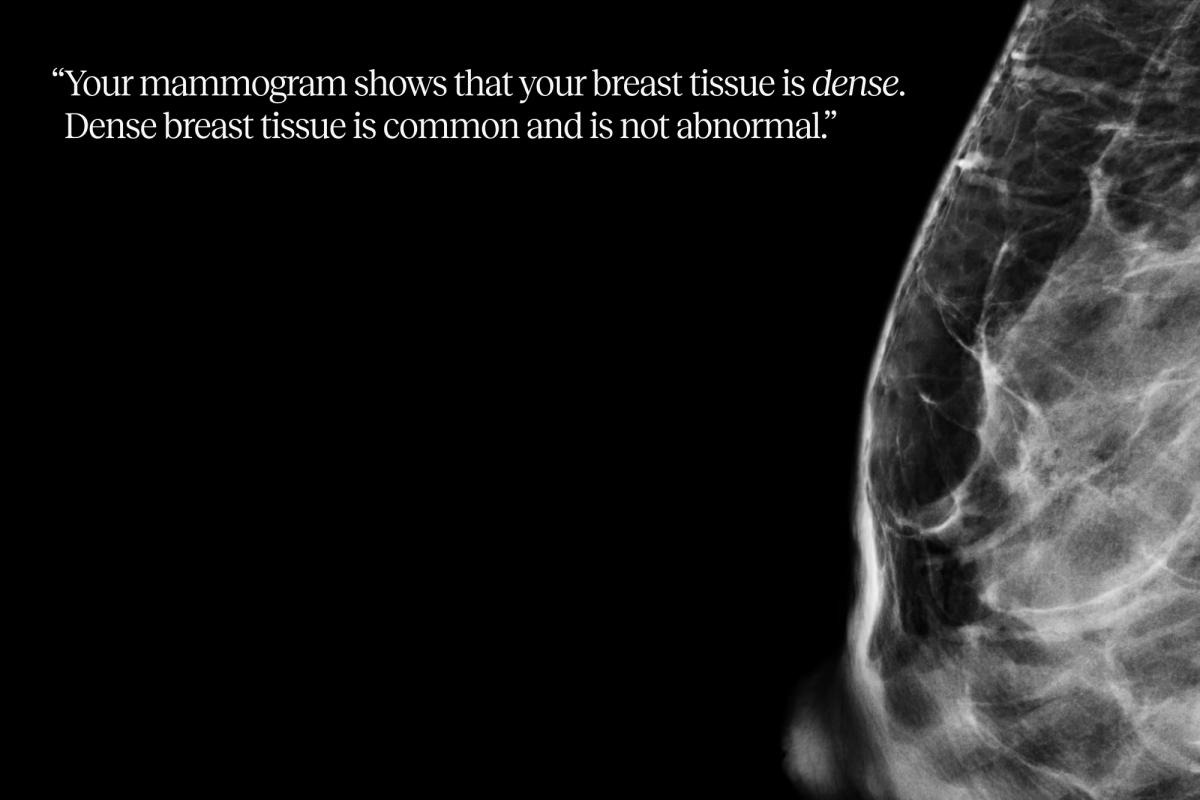
If your mammogram report came back with the word "dense" on it, you're in good company: nearly half of women over 40 who get mammograms have dense breast tissue (NCI, 2024). And as of September 10, 2024, the FDA requires that every mammography report in the US tell you your density, along with a nudge that in some patients with dense tissue, other imaging tests in addition to a mammogram may help find cancers.
Which raises the obvious next question: okay, which imaging test? For most women, the answer is a supplemental breast ultrasound. Here's how it works, what it can and can't tell you, how often you'd get one, and what it costs, so you can walk into your next appointment with a plan instead of a question mark.
(If you're still decoding what "dense" even means on your report, start with our guide to dense breast tissue, explained, then come back.)
Your mammogram report says "dense." Here's what the FDA wants you to know next.
The FDA's density notification rule exists because density changes what a mammogram can see. Dense tissue and cancer both appear white on a mammogram, which means the very tissue type that raises your risk is also the tissue type that can camouflage a tumor. Mammograms miss up to 40% of cancers in women with dense breast tissue, and up to 50% in extremely dense breasts (FDA Federal Register, March 2023; Kolb et al., Radiology 2002).
Density matters for a second reason too: women with dense breast tissue are four to six times more likely to develop breast cancer than women with non-dense breasts (Boyd et al., NEJM 2007). Higher risk, harder to see. That combination is exactly why the FDA now requires you to be told.
None of this means your mammogram was wasted. It means your mammogram may not be the whole picture, and the FDA wants you to know there's a next step.
Why ultrasound sees what a mammogram can miss in dense tissue
Ultrasound doesn't use X-rays. It builds an image from sound waves, distinguishing tissue by density and texture rather than by how much radiation it absorbs. On an ultrasound, dense tissue appears white and most cancers appear dark, so the camouflage problem flips into contrast. The thing a mammogram struggles to separate is the thing ultrasound is built to separate.
It's also radiation-free, compression-free, and requires no contrast dye, which makes it safe to repeat year after year as part of a routine screening rhythm.
What a supplemental breast ultrasound can find, and what it can't

Here's the honest version.
What it adds: when added to mammography, automated breast ultrasound detects 35.7% more breast cancers than mammography alone (FDA PMA P110006). Adding breast ultrasound finds roughly 2 to 5 additional cancers per 1,000 screens in women with dense breasts (JAMA/ACRIN; American College of Radiology), and the cancers found this way are often small and node-negative, meaning early-stage.
What it doesn't do: it doesn't replace your mammogram. Mammography remains the best tool for spotting microcalcifications, which can be an early sign of cancer, and it's the foundation of screening for a reason. Supplemental ultrasound also isn't a guarantee: no imaging test provides 100% detection.
The tradeoff to know about: looking more carefully means finding more things, and not everything found is cancer. Supplemental ultrasound can flag benign findings like cysts that lead to follow-up imaging or, occasionally, a biopsy. For perspective, 75 to 80% of breast biopsies come back benign (MD Anderson Cancer Center). A callback after a supplemental scan is usually thoroughness, not bad news.
MRI and other supplemental options exist too, and MRI is generally reserved for women at high risk. If you're weighing modalities more broadly, our breast ultrasound vs. mammogram guide covers the comparison in depth.
Handheld vs. automated whole-breast ultrasound: what's the difference for you?
Not all screening ultrasound is performed the same way.
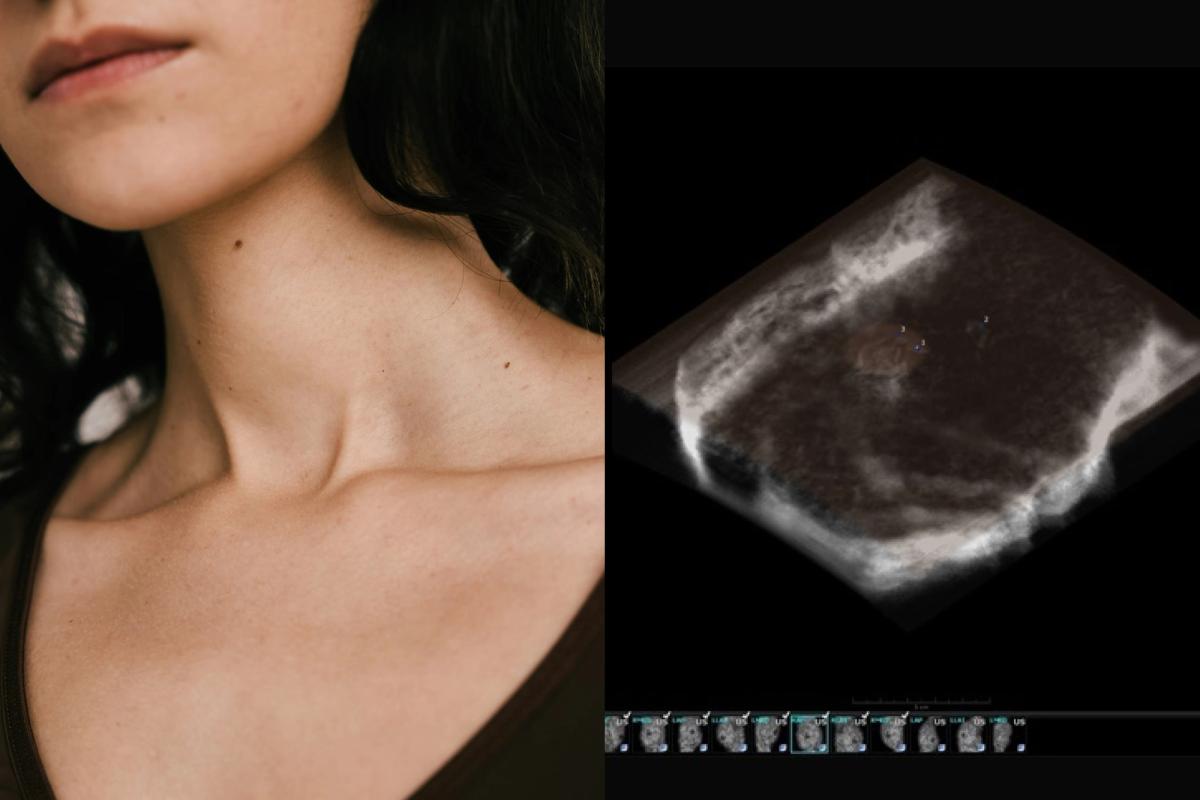
For a one-time look at a specific spot, handheld works well. For screening, where the goal is covering all the tissue the same way every year, automation is the advantage: nothing depends on where the wand happened to go. The GE Invenia ABUS is the first FDA-approved supplemental ultrasound screening technology specifically designed for detecting cancer in dense breast tissue. If you want the deeper technology explainer, we've written what ABUS is and how it works.
The scan
Radiation-free, compression-free, about 20 minutes. See how automated breast ultrasound images the whole breast in 3D.
How often should you get an ultrasound if you have dense breasts?
For most women with dense breasts, supplemental ultrasound is an annual add-on, paired with your regular mammogram so the two tools keep covering each other's blind spots.
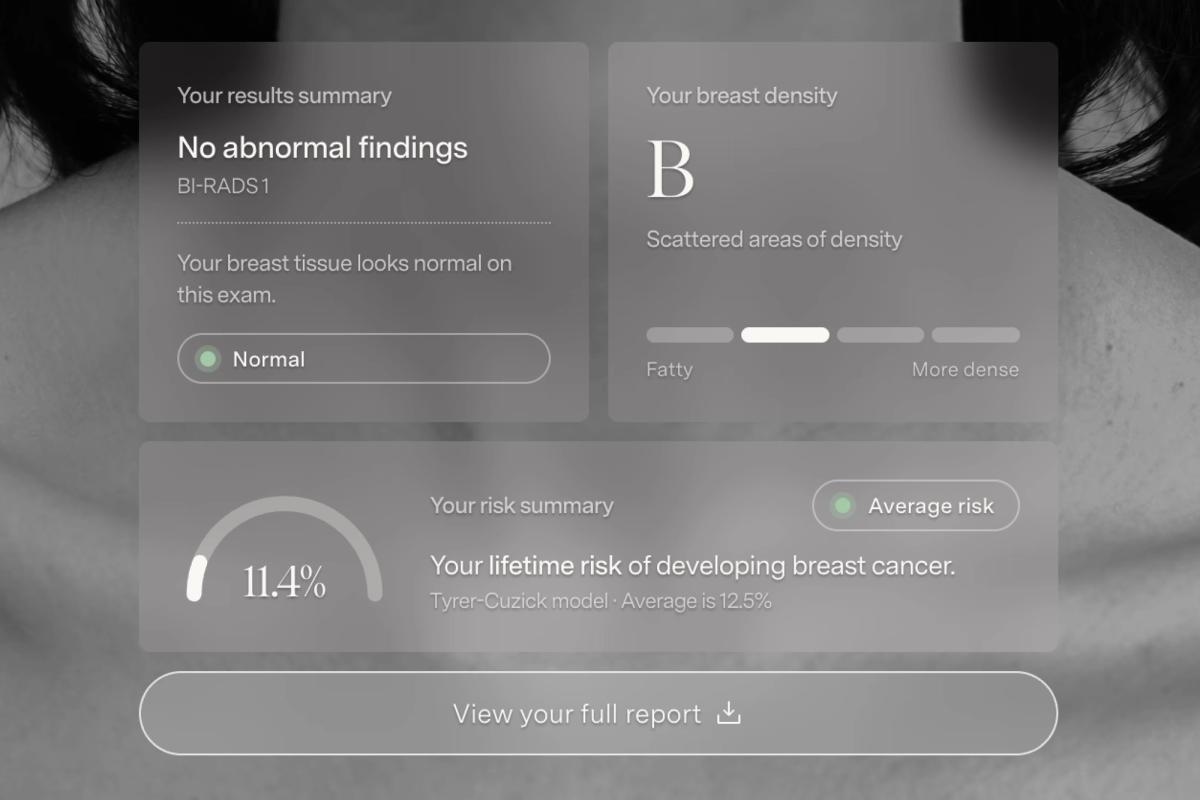
Your exact cadence is a conversation with your provider, and it depends on more than density alone: your family history, your age, and your calculated lifetime risk all factor in. Your density plus your Tyrer-Cuzick score together set your cadence, which is why we recommend knowing both.
BeSound's free, clinically validated Tyrer-Cuzick assessment estimates your lifetime risk in about five minutes. Your density plus your risk score together set your screening cadence.
What it costs and whether insurance covers it
Coverage for supplemental screening ultrasound varies widely. Some states mandate insurance coverage for supplemental imaging in women with dense breasts, others don't, and plan-level details differ even within the same insurer. The only reliable answer comes from your specific plan, so call the number on your card and ask about screening breast ultrasound before you assume either way.
The self-pay route is often simpler than people expect. At BeSound, a scan is $349, HSA and FSA cards are accepted, and we are now accepting Anthem Blue Cross, Blue Shield, Cigna, and Aetna, with coverage and patient cost responsibility determined by your plan.
Do you need a referral for a screening breast ultrasound?
Often, no. Diagnostic ultrasounds (the kind ordered to investigate a lump or a mammogram finding) come through your provider. But screening ultrasound for dense breasts is available without a referral at self-pay imaging services, which means the FDA letter in your hand can turn into a booked appointment this week rather than a months-long referral loop.
Questions worth asking your provider (or the facility, when you book)
My report says heterogeneously dense or extremely dense: which one, and what does that mean for my screening plan?
Should I add supplemental ultrasound annually, and should it be handheld or automated?
Who reads the images, and when do I get results?
Does my risk profile suggest anything beyond ultrasound?
Supplemental screening for dense breasts in Los Angeles and New York
If you're ready to act on your density notification, BeSound offers FDA-approved automated breast ultrasound (ABUS) in Los Angeles: a comfortable scan of about 20 minutes, no radiation, no compression, no dye, read by a board-certified physician, with results in your secure portal within 24 to 48 weekday hours. And New York: our Flatiron location is coming soon.
Book a scan in Los Angeles, or take the free risk assessment to understand where you stand first.

Coming to Flatiron, New York City
FDA-approved automated breast ultrasound is coming to Flatiron. Radiation-free, compression-free, about 20 minutes, with results in 24 to 48 weekday hours. Join the waitlist and be the first to know when booking opens.
For women 18 and older. Not medical advice. Consult a medical professional with any medical questions. BeSound provides supplemental breast ultrasound imaging and does not replace mammography or medical care. Imaging is interpreted by licensed physicians. For marketing purposes only. The American Cancer Society recommends that women at average risk begin regular mammograms at age 40. BeSound is a technology platform that connects individuals with independent partner medical groups that provide breast imaging services; BeSound is not a healthcare provider.
Read more
Start your BeSound journey
Book your scan and view your results directly in your BeSound dashboard.
Learn your risk
Not sure where to start? Take our free risk assessment to better understand your personal risk factors.