Back to Resources
What Is a Bilateral Breast Ultrasound? Why It's Ordered, What to Expect, and What Your Results Can Mean
“US breast bilateral complete” on your order? What a bilateral breast ultrasound is, screening vs. diagnostic, what happens in the room, and what results can mean.

Medically reviewed by
Dr. Rachel F. Brem, MD, FACR, FSBI
Breast Radiologist
Written by
BeSound
Share on:

Key takeaways
Bilateral just means both breasts. A bilateral breast ultrasound is a radiation-free exam of both sides using sound waves, and “complete” means the entire breast is imaged, not just one spot.
Screening and diagnostic are different situations. A diagnostic exam investigates a symptom or a finding, while a screening exam is a proactive check when nothing is wrong.
Dense breast tissue is the most common screening reason. Dense tissue can hide cancer on a mammogram, and added to mammography, automated breast ultrasound detects 35.7% more breast cancers than mammography alone.
The exam is gentle. You'll feel light pressure, nothing painful, and BeSound's automated scan takes about 15 to 20 minutes for both breasts.
Results use the BI-RADS scale. Most screening ultrasounds come back clear or benign, and 75 to 80% of breast biopsies come back benign.
Somewhere between your doctor's office and your patient portal, a line of medical shorthand landed in your lap: "US breast bilateral," maybe with "complete" attached, maybe abbreviated all the way down to "bil breast ultrasound." If you're here trying to translate it, here's the short answer up front: bilateral just means both breasts, and a bilateral breast ultrasound is a radiation-free imaging exam of both sides using sound waves.
That's the definition. The more useful questions are why it was ordered, whether yours is a screening or a diagnostic exam (they're different situations), what happens in the room, and what the report will say. Let's decode the whole thing.
"Bilateral breast ultrasound" decoded: what the words on your order mean
Imaging orders are written for the facility, not for you, so they read like inventory codes. Here's the translation:
Bilateral: both breasts. (Unilateral means one side, usually because there's a specific area of concern on that side only.)
Complete: the entire breast is imaged, not just one spot. A "limited" exam focuses on a single area, like a lump your provider wants a closer look at.
US: ultrasound. Sound waves, no radiation, no compression.
With axilla: the underarm area is included, where lymph nodes live.
So "US breast bilateral complete" means: a full sound-wave scan of both breasts, all the tissue.
Screening vs. diagnostic: two very different reasons for the same exam
This distinction matters more than any other word on your order.
A diagnostic bilateral ultrasound is investigating something: a symptom, a finding on a mammogram, a change your provider noticed. It's a targeted follow-up, and it's usually ordered by a physician. If that's you and you're feeling anxious, one reassuring sentence before you spiral: being sent for more imaging is routine and usually reflects thoroughness rather than bad news. (We've covered what a mammogram callback means separately.)
A screening bilateral ultrasound is proactive: nothing is wrong, no symptom prompted it, and the goal is to check all the tissue in both breasts as a routine layer of surveillance. This is the version most often recommended as a supplement for women with dense breast tissue, where mammograms alone can miss cancers. When added to mammography, automated breast ultrasound detects 35.7% more breast cancers than mammography alone (FDA PMA P110006).
Same exam room, same gel, very different context. Your order (or your intake form) will say which one yours is, and it also affects billing, which we'll get to.
Who typically gets a bilateral (whole-breast) ultrasound
The common reasons an exam covers both breasts, completely:
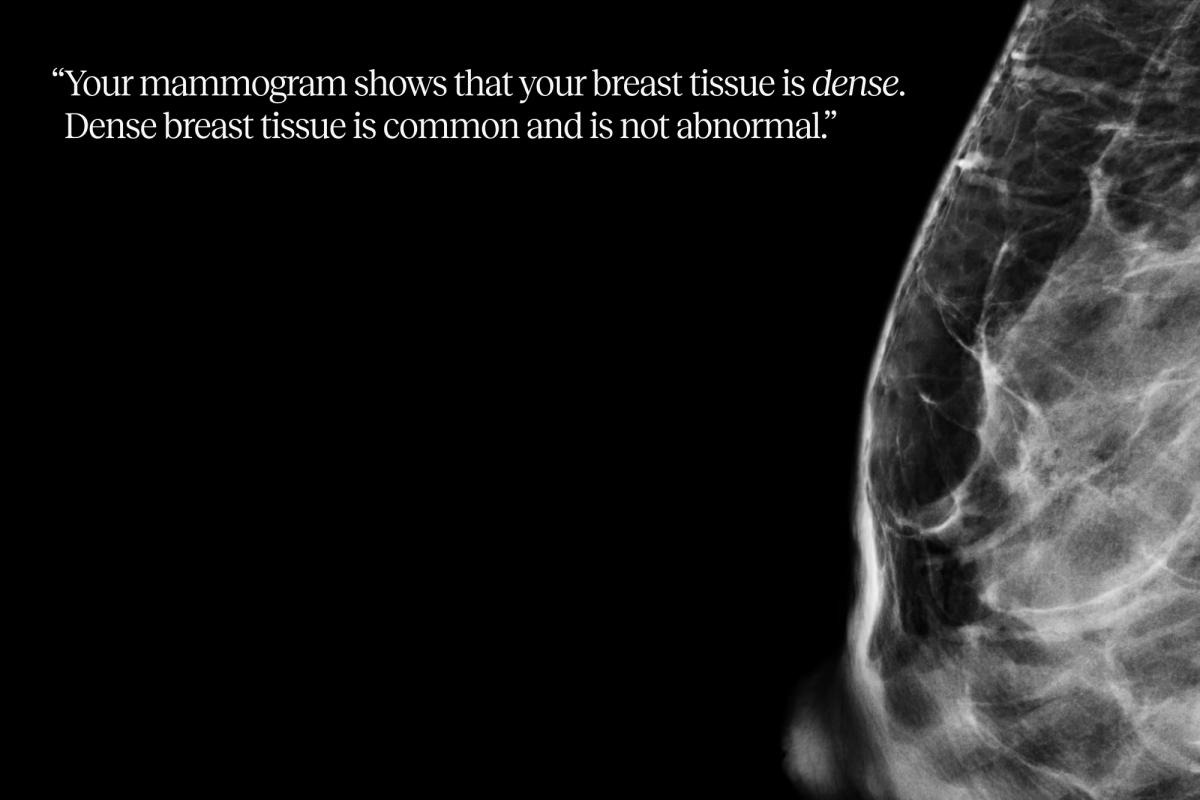
Dense breast tissue. The single most common screening reason. Dense tissue can hide cancer on a mammogram, and ultrasound sees dense tissue differently.
Supplemental screening by choice or by risk. Women with elevated risk, a family history, or simply a preference for more thorough surveillance between mammograms.
Symptoms or findings on both sides, where a diagnostic exam needs to evaluate each breast.
What happens during the exam, and does it include the underarm?
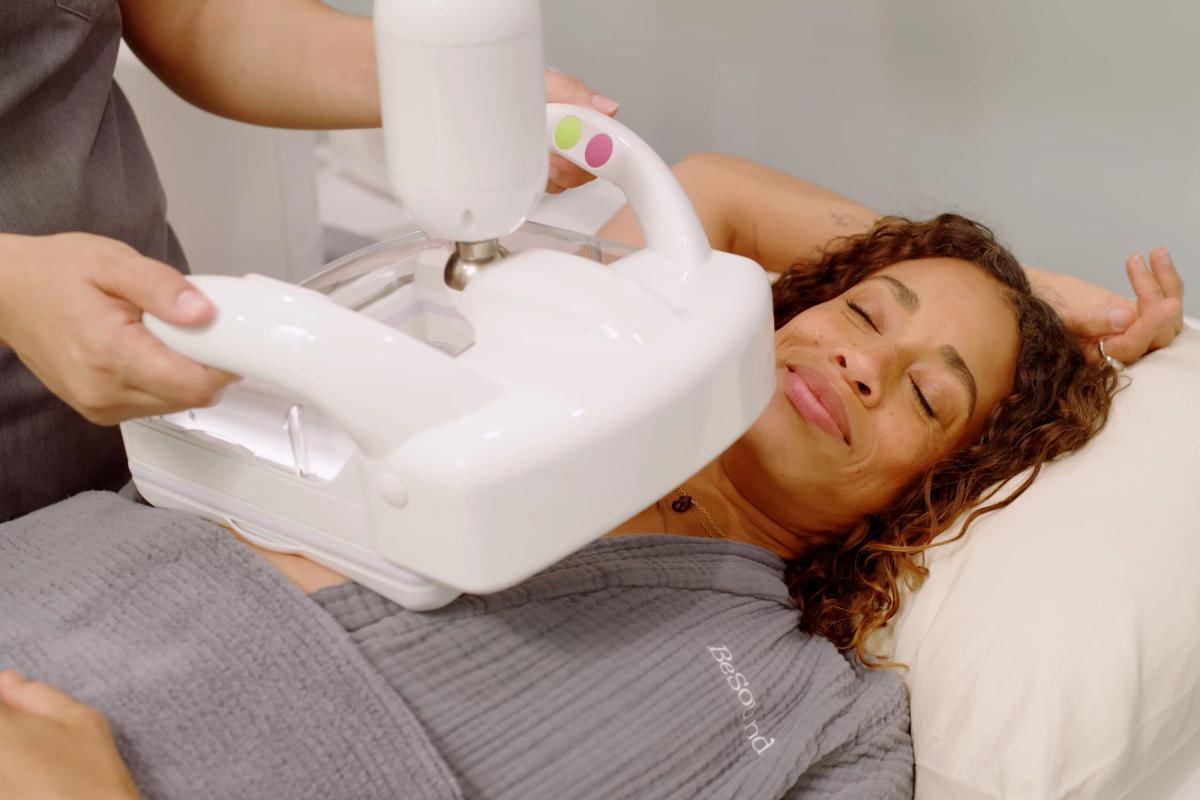
You'll undress from the waist up, lie back, and gel or lotion goes on the skin so sound waves can travel. From there it depends on where you go: at many facilities a sonographer sweeps a handheld transducer across each breast, while at BeSound the exam is automated, with a soft curved transducer sweeping each breast on its own and warm lotion instead of cold gel. Either way, you'll feel light pressure, nothing painful. BeSound's automated scan takes about 15 to 20 minutes for both breasts; handheld exam times vary by facility.
Does it include your armpits? That depends on what was ordered and where you go, so if it matters to you, ask when you book: it's a completely normal question.
Handheld sweep vs. automated 3D capture: two ways to image the whole breast
A complete bilateral ultrasound can be performed two ways. The traditional way is a sonographer sweeping a handheld wand across each breast in overlapping passes, with the thoroughness of the exam depending on the person holding the wand. The newer way is automated: a system like ABUS captures each breast as a standardized 3D volume, the same complete acquisition every time, which a board-certified physician then reviews. Automated capture is how screening exams achieve consistency year over year.
If you want the full technology explainer, including how automated capture differs from the ultrasound at your doctor's office, read what ABUS is.
The scan
Radiation-free, compression-free, about 20 minutes. See how automated breast ultrasound images the whole breast in 3D.
Understanding your results: BI-RADS categories and what happens next
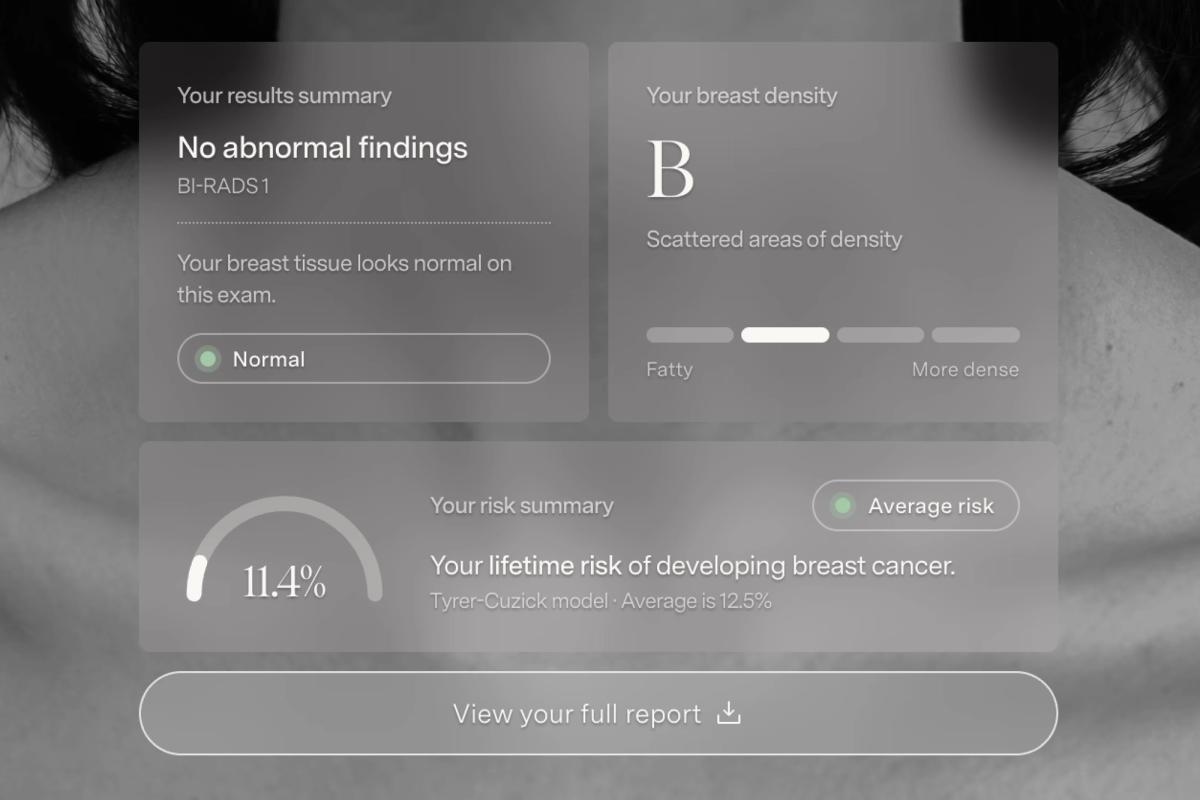
Breast imaging reports in the US use a standard scale called BI-RADS, category 0 through 6. It's a communication tool between the reading physician and your provider, not a diagnosis. The short version: BI-RADS 1 and 2 mean normal or benign findings (the most common outcomes), BI-RADS 0 means more imaging is needed to finish the assessment, BI-RADS 3 means something almost certainly benign that gets a short-interval follow-up, and BI-RADS 4 and 5 mean a biopsy is recommended to find out for sure.
Two calming facts to hold onto while you wait: most screening ultrasounds come back clear or benign, and even when a biopsy is recommended, 75 to 80% of breast biopsies come back benign (MD Anderson Cancer Center).
Cost, CPT 76641, and whether you need a referral
Reading your order: the CPT code for a complete breast ultrasound is 76641; a limited exam is 76642. The codes describe the exam, not the reason for it, which is why the screening-vs-diagnostic distinction above drives how your insurance processes it.
Cost: diagnostic exams ordered by your provider run through insurance in the usual way. Screening breast ultrasound coverage varies by plan and by state. Self-pay is a straightforward option: at BeSound, a scan is $349, HSA and FSA cards are accepted, and we are now accepting Anthem Blue Cross, Blue Shield, Cigna, and Aetna, with coverage and patient cost responsibility determined by your plan.

Referral: diagnostic exams need an order. Screening exams often don't: if you have dense breasts and want a whole-breast screening ultrasound, self-pay screening services let you book directly without a referral.
Booking a whole-breast screening ultrasound in Los Angeles or New York
If what brought you here is "can I just get a bilateral ultrasound for my dense breasts," the answer is yes. BeSound offers FDA-approved automated breast ultrasound (ABUS) in Los Angeles: a complete, standardized 3D scan of both breasts, no radiation, no compression, no referral needed, read by a board-certified physician, with results in your secure portal within 24 to 48 weekday hours. And New York: our Flatiron location is coming soon.
Book a scan in Los Angeles, or learn how ABUS works first.

Coming to Flatiron, New York City
FDA-approved automated breast ultrasound is coming to Flatiron. Radiation-free, compression-free, about 20 minutes, with results in 24 to 48 weekday hours. Join the waitlist and be the first to know when booking opens.
For women 18 and older. Not medical advice. Consult a medical professional with any medical questions. BeSound provides supplemental breast ultrasound imaging and does not replace mammography or medical care. Imaging is interpreted by licensed physicians. For marketing purposes only. The American Cancer Society recommends that women at average risk begin regular mammograms at age 40. BeSound is a technology platform that connects individuals with independent partner medical groups that provide breast imaging services; BeSound is not a healthcare provider.
Read more
Start your BeSound journey
Book your scan and view your results directly in your BeSound dashboard.
Learn your risk
Not sure where to start? Take our free risk assessment to better understand your personal risk factors.