Back to Resources
BI-RADS Scores Explained: What Each Category Means and What Happens Next
A BI-RADS score is a category from 0 to 6, not a diagnosis. What each category means, how likely cancer actually is at each level, and what happens next.

Medically reviewed by
Dr. Rachel F. Brem, MD, FACR, FSBI
Breast Radiologist
Written by
BeSound
Share on:

Key takeaways
A BI-RADS score is a category, not a diagnosis. It runs from 0 to 6 and tells your care team what was seen and what, if anything, should happen next.
Most screening exams come back BI-RADS 1 or 2. A 1 means nothing was found and a 2 means a benign finding, and both mean routine screening on your usual schedule.
BI-RADS 0 means incomplete, not concerning. The physician needs more imaging before assigning a final category from 1 to 5.
BI-RADS 3 is probably benign. It carries a less than 2% chance of cancer, so the standard next step is short-interval follow-up imaging rather than a biopsy.
BI-RADS 4 and 5 usually lead to a biopsy. Category 4 spans a 2% to 95% likelihood of cancer depending on its sub-level, and between 75 and 80% of breast biopsies come back benign.
A BI-RADS score is the category a physician assigns to your breast imaging results, on a scale from 0 to 6. It is not a diagnosis. It is a standardized way of saying what was seen and what, if anything, should happen next.
If you've just opened a report from a mammogram, breast ultrasound or breast MRI and found "BI-RADS 2" or "Category 3" near the bottom, here's what it means. Below: each category, how likely each one is to involve cancer according to the American College of Radiology, and what typically happens next, including on a BeSound automated breast ultrasound report in Los Angeles or New York.
What is a BI-RADS score, and who assigns it?
BI-RADS stands for Breast Imaging Reporting and Data System. It is a standardized scoring system from the American College of Radiology that physicians use to categorize findings from a breast imaging exam, so a result means the same thing no matter where it was read.
The physician who interprets your imaging assigns the category and writes it into your report. A lower number generally means no findings, or a benign finding that needs no action. Higher numbers mean a finding that may warrant follow-up. Our FAQ page has the short version of each category. This is the long one.
Two things to know before the category-by-category breakdown. Most screening exams come back BI-RADS 1 or 2. And no BI-RADS category is a diagnosis on its own: even the highest categories describe how a finding looks on imaging, and a diagnosis comes from a biopsy, not from the number.
Does BI-RADS apply to ultrasound and MRI, or only mammograms?
BI-RADS applies to mammography, breast ultrasound and breast MRI. The American College of Radiology maintains one manual with a classification system for all three, so a BI-RADS 2 on an ultrasound report means the same thing as a BI-RADS 2 on a mammogram report (American College of Radiology).
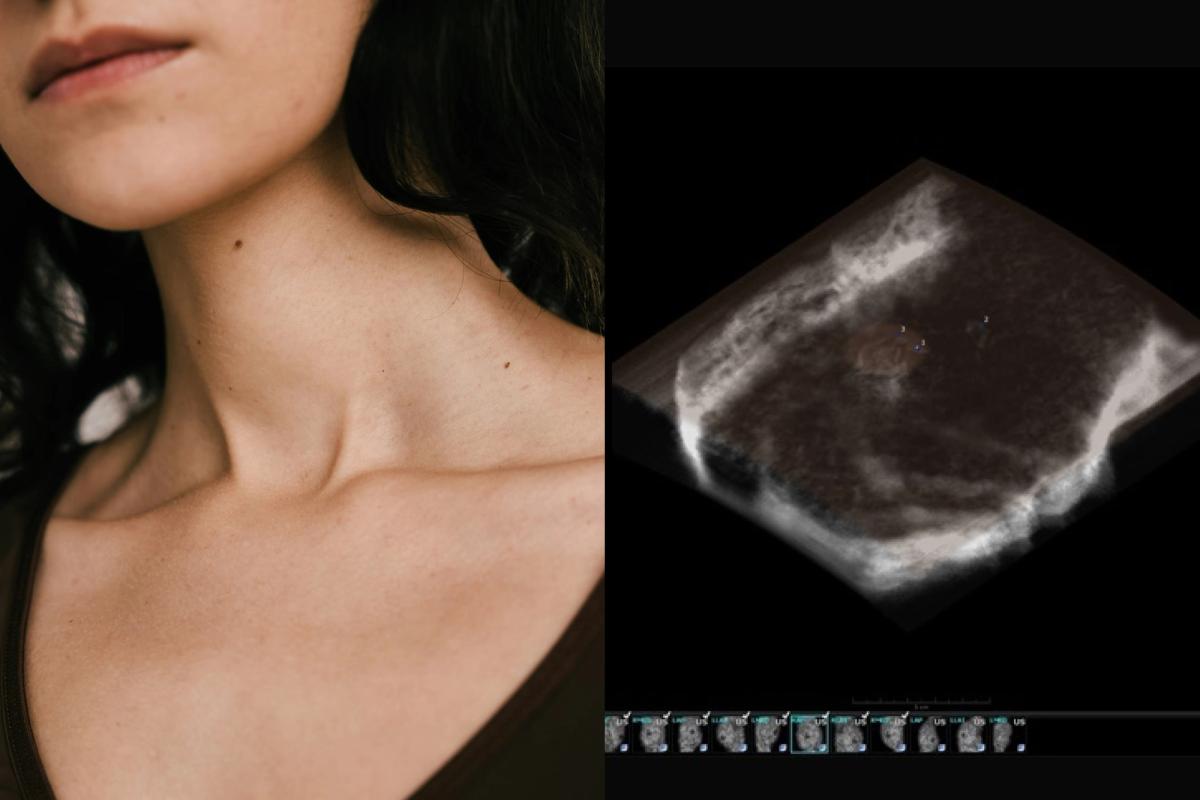
That includes automated breast ultrasound. Every BeSound report is interpreted by a board-certified physician and carries a BI-RADS category, exactly as a mammogram report would. If you're new to automated breast ultrasound, our guide to what ABUS is explains how it differs from a handheld scan, and breast ultrasound vs. mammogram covers how the two work together.
What does each BI-RADS category mean?
The seven BI-RADS categories run from 0 (incomplete) to 6 (known cancer). The table below summarizes what each one means, how likely it is to involve cancer, and the usual next step.
Swipe sideways to see all four columns.
Likelihood of cancer per the American College of Radiology BI-RADS Atlas.
On your BeSound report
Read by a board-certified physician and delivered to your secure portal within 24 to 48 weekday hours. If anything needs follow-up, a Patient Care Coordinator reaches out.
What does BI-RADS 0 mean? Is it bad?
BI-RADS 0 means incomplete: the physician needs more imaging before a final category can be assigned. It is not a finding of cancer, and it is not a score of concern in itself.
A BI-RADS 0 usually means something couldn't be fully seen on the first pass, and the physician wants a better look, whether that's extra views, an ultrasound, or a comparison with prior images. Once that additional imaging is done, the exam gets a final category from 1 to 5.
If you've been called back after a mammogram, that callback is often a BI-RADS 0 in action. Our guide to being called back after a mammogram walks through what to expect.
On a BeSound report, a BI-RADS 0 means a Patient Care Coordinator will follow up within 24 to 48 weekday hours to walk you through next steps and coordinate any additional imaging.
What do BI-RADS 1 and 2 mean? Is BI-RADS 2 benign?
BI-RADS 1 means negative: nothing was found. BI-RADS 2 means benign: something was seen, and it is not cancer. Both carry the same recommendation, which is to keep up routine screening on your usual schedule.
A BI-RADS 2 is not a step down from a 1. It means the physician noted something so it's documented for future comparison, and concluded that it's benign. Common BI-RADS 2 benign findings include simple cysts (fluid-filled sacs), calcified fibroadenomas (common non-cancerous lumps that have developed calcium deposits), normal lymph nodes inside the breast, and breast implants (ACR BI-RADS Atlas). If cysts or fibroadenomas are new words to you, our post on fibrocystic breast changes explains what they are.
On a BeSound report, either result means no follow-up is required. You may share the report with your primary care provider or OB-GYN so they can add it to your care record.
Is BI-RADS 3 dangerous? What percentage of BI-RADS 3 is cancer?
BI-RADS 3 is a "probably benign" finding with a less than 2% chance of malignancy, meaning cancer (ACR BI-RADS Atlas). It is not a suspicious finding, and the standard recommendation is short-interval follow-up imaging rather than a biopsy.
Why follow-up instead of a biopsy? Category 3 exists so that findings that are almost certainly benign can be watched instead of biopsied. Follow-up imaging typically starts at about six months and continues periodically until the finding has been stable long enough to be reclassified as benign (ACR BI-RADS Atlas).
On a BeSound report, a Patient Care Coordinator will follow up within 24 to 48 weekday hours to discuss the recommended follow-up schedule.
Is BI-RADS 4 always cancer? What's the difference between 4A, 4B and 4C?
No. BI-RADS 4 is a "suspicious" finding with anywhere from a 2% to 95% likelihood of malignancy (ACR BI-RADS Atlas). It is the widest category in the system, which is exactly why it's divided into three sub-levels:
BI-RADS 4A: low suspicion, with a 2% to 10% likelihood of malignancy
BI-RADS 4B: moderate suspicion, with a 10% to 50% likelihood of malignancy
BI-RADS 4C: high suspicion, with a 50% to 95% likelihood of malignancy
So what percentage of BI-RADS 4 is cancer? It depends on the sub-level. A 4A finding is more likely benign than not, by a wide margin. A 4C finding is more likely cancer than not. Your report may specify which sub-level applies to you, and if it doesn't, that's a fair question for your care team.
Because a BI-RADS 4 finding can't be resolved with imaging alone, a biopsy is usually recommended. If that's the word that stops you, here's the number worth knowing: between 75 and 80% of breast biopsies come back benign (MD Anderson Cancer Center).
What about a "BI-RADS 4 survival rate"? There isn't one. A BI-RADS category is an imaging assessment, not a survival statistic. Survival is tied to the stage at which a cancer is found, which a biopsy and your care team determine. The stat that does apply: when breast cancer is caught at the localized stage, the five-year survival rate is over 99% (ACS Cancer Facts & Figures 2026).
On a BeSound report, a suspicious finding comes with recommended next steps written into your results, and a Patient Care Coordinator will follow up within 24 to 48 weekday hours to review them with you. Those next steps may include additional diagnostic imaging at a BeSound location, a referral to a partner breast imaging center, or coordination with a breast specialist, OB-GYN or primary care provider.
What does BI-RADS 5 mean, and what is BI-RADS 6?
BI-RADS 5 is "highly suggestive of malignancy," meaning a 95% or higher likelihood of cancer based on how the finding looks on imaging (ACR BI-RADS Atlas). BI-RADS 6 is used only when a biopsy has already confirmed cancer and imaging is being done as part of ongoing care.
Even at Category 5, the number is an imaging assessment, not a confirmed diagnosis. A biopsy confirms it, and from there a care team plans what comes next.
BI-RADS 6 is a bookkeeping category. It means the cancer is already known, and this exam was done to evaluate it, for example before or during treatment.
On a BeSound report, either category comes with prompt outreach. A Patient Care Coordinator follows up within 24 to 48 weekday hours to help connect you with appropriate next steps and to confirm your care team has received the report.
What happens after each BI-RADS category?
Each BI-RADS category points to one of five next steps: more imaging (0), routine screening (1 and 2), short-interval follow-up (3), biopsy (4 and 5) or treatment planning (6). The physician who interpreted your imaging writes that recommendation into your report.
On a BeSound scan, your images are reviewed and interpreted by a board-certified physician. BeSound uses GE Invenia ABUS with QVCAD, the first FDA PMA-approved AI system for concurrent reading of ABUS exams. AI-assisted reading flags areas for closer review. A board-certified physician makes the final call. Within 24 to 48 weekday hours, you'll receive an email directing you to your results in your secure patient portal, BI-RADS category included. If anything needs follow-up, a Patient Care Coordinator reaches out within 24 to 48 weekday hours.
Automated 3D breast ultrasound is coming to Flatiron. Join the waitlist to be first to know when appointments open.
Common questions about BI-RADS scores
Is a BI-RADS score a diagnosis?
No. A BI-RADS score is a communication tool that helps your care team decide what next steps, if any, are appropriate. A diagnosis comes from a biopsy, not from an imaging category.
Can a BI-RADS category change?
Yes. A BI-RADS 0 becomes a final category once additional imaging is done, and a BI-RADS 3 finding that stays stable through follow-up is generally reclassified as benign.
What's the difference between a screening exam and a diagnostic exam?
A screening exam looks at the whole breast in someone with no symptoms. A diagnostic exam takes a closer look at a specific area, often after a callback or a symptom. Both use BI-RADS. Our guide to bilateral breast ultrasound covers the difference in more detail.
I have a lump or another symptom. Should I book a BeSound scan?
If you have a lump, nipple discharge, pain or another change, contact your provider about diagnostic imaging. BeSound offers supplemental screening, which is different from a diagnostic workup, and does not replace medical care.
How long do BeSound results take?
Results are delivered within 24 to 48 weekday hours to your secure patient portal. If your appointment is on a Saturday, please account for the weekend when estimating delivery.
Supplemental breast ultrasound in Los Angeles and New York
If your report left you with more questions than answers, BeSound offers FDA-approved automated breast ultrasound (ABUS) in Los Angeles: a scan of about 20 minutes, no radiation, no compression, no dye, read by a board-certified physician, with results in your secure portal within 24 to 48 weekday hours. Every report includes a BI-RADS category and the recommended next step. And New York: our Flatiron location is coming soon, and you can join the waitlist to be first to know when we open.
Not medical advice. Consult a medical professional with any medical questions. BeSound provides supplemental breast ultrasound imaging and does not replace mammography or medical care. Imaging is interpreted by licensed physicians. For marketing purposes only. The American Cancer Society recommends that women at average risk begin regular mammograms at age 40. BeSound is a technology platform that connects individuals with independent partner medical groups that provide breast imaging services; BeSound is not a healthcare provider.For women 18 and older.
Read more

Start your BeSound journey
Book your scan and view your results directly in your BeSound dashboard.
Learn your risk
Not sure where to start? Take our free risk assessment to better understand your personal risk factors.